The parts users never see.
- Year
- Since 2025
- Role
- Apprentice developer at a hosting company
- Stack
- Linux, Node.js, PHP, Redis, MariaDB, Apache
- Links
- Source on GitHub ↗
Overview
APIs, deployment pipelines, database schemas and the automation that keeps all of it running – the day job, at a hosting company in Germany.
Most of my working time goes into backend services in Node.js, TypeScript, PHP and Python, with Vue where a UI is needed – and into the ops half of the job: Linux, Apache, Redis, MariaDB, cron and shell glue.
The thread through all of it is automation that removes repetitive work: CI pipelines, scripts and bots. Every change starts as an issue and lands through a reviewed pull request.
Implementation
01
From commit to production
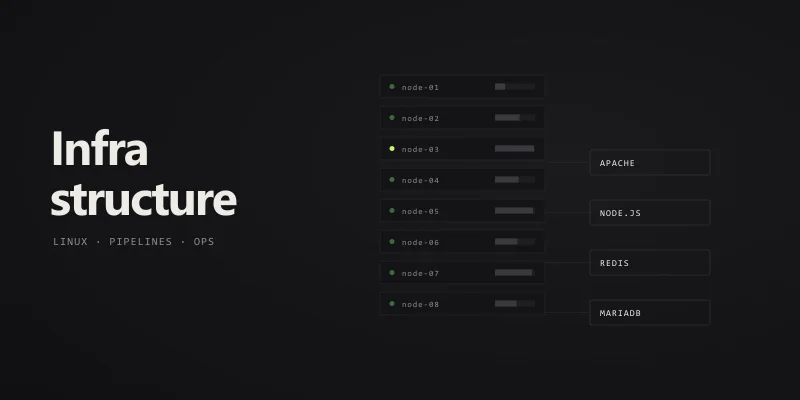
Local development with Vue and Vite, GitHub Actions for lint, tests and builds, artifacts deployed behind Apache or Node.js, Redis for caches and sessions, MariaDB and MongoDB for data, logs and metrics closing the loop.
02
The right tool for the job
Node.js for HTTP APIs and realtime, PHP for classic web apps, Python for CLIs and glue – MariaDB for relational data, Redis for anything hot and short-lived, SQLite when a single file is enough.
Technical challenges
Boring on purpose
Infrastructure is good when nobody notices it. Tests that run offline, reviewed changes and scheduled jobs keep it that way.